Live Events
How to Tour China: A Step by Step Guide

By
Percy Holtzman, Founder
09.21.26
/
12 min.
Everything Between the First Call and the First Encore
If you are working out how to tour China for the first time, the good news is that there is a sequence, it is knowable, and it works. More than 350 overseas musicians and bands played China last year. Overseas acts appeared at over half the country's music festivals. Commercial performances did 30.4 billion yuan in the first half of 2026 alone, with 98.8 million people through the doors. None of those artists found a secret door. They all walked through the same one, in the same order.
This guide is that order. It covers whether your music is ready, how the approval process actually runs, which room to play, where in the country to play it, when to go, how tickets work, and the piece almost every first timer leaves too late, which is building the audience before you land. It is written from inside a team that runs these tours, so where the honest answer is "it depends on the city", it says so.
Read it once end to end, then use the sections as a checklist.
Is Your Music Ready for China
The first question is not whether China wants international acts. It does, and the numbers above settle that. The question is what kind of first show your existing audience supports.
Start with the signals you already have. Look at your streaming geography and whether any of it comes from mainland China, through NetEase Cloud Music or QQ Music rather than Spotify, which does not operate there. Look at whether Chinese fans have found you on Bilibili or Xiaohongshu already, because they often do before an artist has any idea. Look at whether you have played anywhere else in Asia and what that told you. A handful of unprompted Chinese fan accounts is a real signal. So is a song that travelled on Douyin without your involvement, which happens more than people expect.
Then match the signal to an entry point. There are three, and the right one is usually one rung lower than instinct suggests.
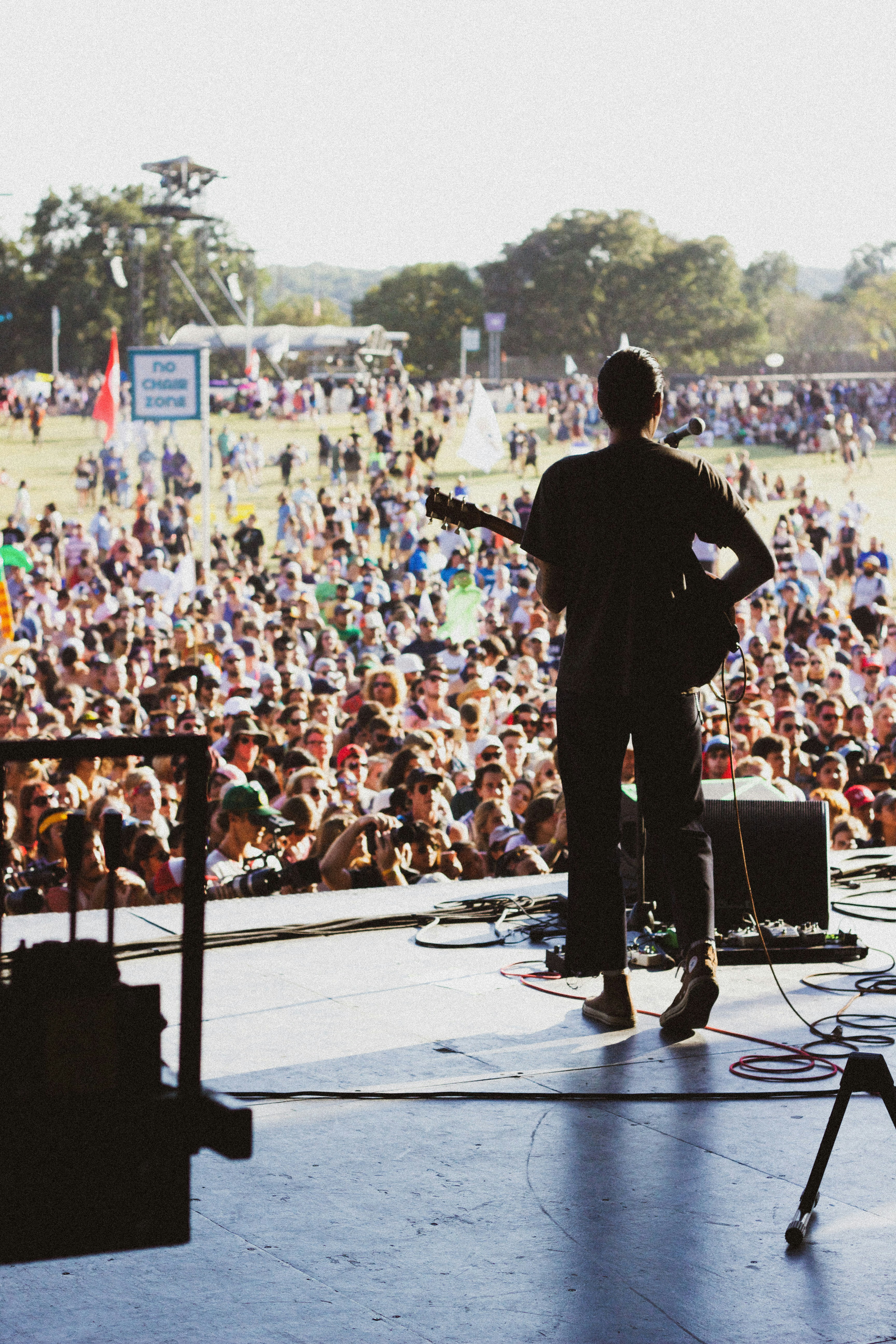
A live house run is a string of small club shows, usually a few hundred people each, across three to six cities. It is how you find out whether you have an audience in a given city or just follower counts that look nice, and it is how promoters find out whether you are worth a bigger risk next time. A festival slot puts you in front of a crowd that did not come for you, with production and promotion the festival handles, and for a lot of acts it is now the front door rather than the club show that comes after. A theater or hall run, roughly a thousand to three thousand seats, is for acts with demand already proven, and it is where a lot of international artists do their best work here.
China music market entry is not one decision. It is choosing which of those three doors you can genuinely fill, then filling it, because a sold out small room in China is worth more than almost anywhere else. So much of what happens next runs on social proof.
The Approval Process, Step by Step
This is the part of touring China that gets discussed the least and matters the most. Every commercial performance by a foreign act needs approval from the local culture authorities in each city on the run. It is not a formality and it is not a mystery. It is a process, and here is the shape of it.
A Chinese organizer files on your behalf. Foreign teams cannot submit the application themselves. Every successful tour starts with a local partner who holds the right to file, which is why the first real step is choosing that partner, not choosing a venue.
The application carries the whole show. The full program, the lyrics of every song you plan to perform, audio and video materials, artist resumes and the tour itinerary. Lock your setlist earlier than you would elsewhere, because those lyrics travel with the paperwork, and changes after filing mean refiling.
Each city reviews its own show. A five city run is five approvals moving in parallel, each on its own clock. One city coming through late can hold an announcement for the whole run, which is why routing and paperwork are planned together, not in sequence.
Approval lands, then tickets go on sale. Nothing is announced and nothing is sold before the approval exists. This is the single most common way a first China run goes wrong: an announcement made off a verbal yes, then reprinted posters.
Visas are sequenced after approval. Performing for money needs a work visa, and that visa is tied to the performance approval and to a sponsoring agency on the ground. Visa free entry, which now covers a long list of countries for short visits, is for coming to look, not coming to play. The two are different processes.
Production and crew are confirmed against the approved routing. Local crew, freight, backline and hotels all follow the dates the approval fixed. Change a date now and you are back at step three for that city.
The practical advice is simple. Start early, lock the setlist, choose the partner before the venue, and build the approval timeline into the routing the same way you build in flights and freight. Artists who treat the process as part of the tour, rather than an obstacle to it, are the ones who play the shows they announce. There is a longer plain language version of this in what it actually takes to play a show in China.
Choosing Your Venue: The China Venue Ladder
China has a venue ladder, and the most valuable booking decision you will make is which rung to start on.
Rung | Typical capacity | What it is for |
|---|---|---|
Live houses | 100 to 1,500 | First runs, proving demand city by city, generating the clips that sell the next run |
Theaters and mid size halls | 1,000 to 3,000 | Established acts stepping up, and where the economics work without a sponsor carrying the show |
Gymnasiums and arenas | 5,000 and up | Headline plays with demand already built, longer lead times, much more capital at risk |
Festivals | Varies by stage | Reaching an audience that did not come for you, often with production handled |
Non traditional rooms | Varies | Malls, heritage sites, tourist zones and themed venues with a host motivated to fill them |
Live houses are the backbone of the touring circuit. Beijing, Shanghai, Chengdu, Wuhan and Xi'an all have well run rooms with real regulars, and the two biggest ticketing platforms, Showstart and Damai (大麦), between them carry the whole ladder. Showstart alone ran more than 18,000 ticketed events in 2025. That is the scale of the small room circuit, and it is where most international careers in China begin.
Festivals deserve their own line because they matter more in China than in most markets. Strawberry Music Festival runs multiple cities in a season and has become a normal entry point for foreign acts. Bubbling and Boiling, which only launched in 2023, already runs several cities and books international indie and alternative names. A festival slot in spring can be the thing that makes an autumn live house run sell.
The honest rule for choosing is that the right room is usually one size smaller than the one you want. Nobody remembers the size of the room you played three years ago. They remember whether it was full. The venue ladder in detail, including the rooms most teams never think of, is its own post.
Where in China: Beyond the First Tier Cities
If your mental map of touring China is Beijing, Shanghai and maybe Guangzhou, you are working from an old map. In 2025, 45.6 percent of multi artist concerts took place in third tier cities and below, and lower tier cities carried more than 40 percent of the country's music festivals. Hangzhou, Chengdu and Sanya have become destinations for live performance, not consolation stops.
Two things make that possible. The first is that Chinese fans travel. Taking a high speed train to another province for a show and making a weekend of it is normal, the way people in Europe cross borders for a gig. A strong booking in a second tier city reaches an audience far bigger than the city itself. The second is that the cities want you. Live performance pulls hotels, restaurants, transport and retail along with it, at a multiplier the industry association puts at nearly seven yuan of related spending for every yuan of ticket, and a number of municipalities actively court events with venue access, marketing support and tourism board promotion. Which cities are chasing shows changes every season, and that is local knowledge.
For a first run this means the routing question is wide open. A five city run does not have to include Shanghai. It has to include the five cities where your audience already is and where the rooms suit your production. Why cities are competing for your show explains the economics behind that in more detail.
Timing Your Run
Every run has its own clock, and no timeline guarantees a date; approvals, venue availability and the season all move it. As a planning horizon, a live house or theater run is usually several months out, and festival slots get spoken for a season ahead, so for a spring festival the conversation happens the previous autumn. Here is the typical shape of the calendar, framed for someone planning rather than someone ready to book.
Six months out, agree the routing, choose the local partner, lock the setlist, and start the social campaign, because demand takes months to build and cannot be rushed at the end. Four to five months out, applications are filed in each city and the marketing plan is built around the approval timeline. Two to three months out, approvals land, tickets go on sale, promotion scales up, and visas are sequenced against the confirmed routing. One month out, production is advanced, local crew confirmed, freight booked. Show week is load in, soundcheck, doors. After the run, the content tail keeps working on Chinese platforms for weeks, and that tail is what sets up the next, bigger run.
Then put the Chinese public holidays on the same page as your routing and look at them together. The State Council publishes the whole calendar in one notice each November, and it decides more than most foreign teams realize. Spring Festival, nine days in February in 2026, is not a window, it is a wall: crews go home, venues go dark, freight stops. National Day, the first week of October, is the busiest travel period of the year, with hotels and trains selling out rather than just getting expensive. Both are also the best travel windows your audience gets all year, which is exactly why second tier city dates can turn regional during a holiday. And the days around them are often converted weekends, so a Saturday on your calendar may be a working day on theirs. Crew on an official public holiday carries a legal minimum of triple wages under the standard working hour system. None of this is hidden. It is just that almost nobody routing from abroad reads it.
How Tickets Work
Ticketing in China has rules that are worth knowing before you set an on sale date, because they shape how a show sells.
Generally speaking, tickets to larger shows in China carry a name. Real name purchase and entry is the norm for big commercial performances, so the person walking in is expected to be the person who bought the ticket, and most of the room goes on public sale, with a smaller share held back for guests, sponsors and fan club allocations that also ends up tied to named holders before the show. Organizers are expected to run a refund process and to work through recognised ticketing platforms. The details vary by city, by show size and over time, so treat this as the shape of it rather than a rulebook; your promoter will know the current requirements for each room.
The platforms are not the ones you know. The two biggest are Damai (大麦), owned by Alibaba, and Showstart, and between them they cover everything from arenas to livehouses. Your promoter will place the show with the right one; your job is to make sure your Chinese social accounts link to it, because a fan who finds your clip on Douyin and cannot find where to buy is a fan you have lost. How concert tickets actually work in China walks through the whole system.
Building Demand Before You Land
This is the section that separates the runs that sell from the runs that nearly sold, and it is the one first timers most often leave until the announcement.
Your Chinese audience does not live on Instagram, X or Spotify. It lives on Douyin, Xiaohongshu, Bilibili, WeChat Video Channels, NetEase Cloud Music and QQ Music, and if you are not there, you are invisible to the people you are asking to buy a ticket. Douyin is where a song travels: the number that matters is not streams but uses, how many people took your track and made their own video with it. Xiaohongshu is where fans decide whether to trust you, through notes, recommendations and the sense that something is happening. Bilibili is where the serious ones go deep. Each does a different job and they reinforce each other.
The sequence that works is to start the accounts months before the announcement, seed clips that suit each platform rather than reposting the same edit everywhere, respond in Chinese, and let local fan communities pick up the story. By the time approvals land and tickets go on sale, the demand is measurable, and you can see which cities the audience is actually in, which tends to make the routing conversation a lot shorter. The content you make on the run then feeds the next one. Touring and social are one motion here, not two departments.
If you are starting from zero, read how artists actually grow on Douyin before they land first, and our full guide to Chinese social media for musicians covers every platform in one place.
A First China Run, in One Page
Choose the smallest entry point you can genuinely fill. Choose the local partner before the venue. Lock the setlist early, because it travels with the application. Let each city's approval land before anything is announced or sold. Sequence visas after approval. Route around where your audience already is, which is often not the first tier. Put the public holiday calendar next to the routing. Set up ticketing links on every Chinese account. Start the social campaign six months out, not six weeks. Treat the content from the run as the start of the next one.
Frequently Asked Questions
Do foreign artists need a permit to perform in China?
Yes. Every commercial performance by a foreign act needs approval from the local culture authorities in each city on the run. A Chinese organizer files the application on the artist's behalf, and it includes the program, the lyrics, audio and video materials, artist resumes and the itinerary. Nothing is announced or sold before it lands.
How far in advance should I plan a China tour?
It varies by city, venue and season, and no timeline guarantees a date. As a planning horizon, a live house or theater run is usually months out and festival slots are spoken for a season ahead. The approval process has its own clock in each city, the best dates get taken early, and the audience building on Chinese platforms takes months to work. Earlier is always cheaper than later here.
Can new artists tour China, or only established acts?
New artists tour China every month. The usual entry point is a live house run of a few hundred people per city, or a festival slot, paired with a social campaign so demand is real before the first show. Selling out small rooms builds the case, the clips and the promoter relationships for bigger ones.
What is the difference between a live house run and a festival slot?
A live house run is a string of your own small club shows across several cities, where you prove demand city by city and generate the content that sells the next run. A festival slot is one set in front of a large crowd that did not come for you, with production often handled, which is the fastest way to reach new listeners. Many acts do the festival first and the live houses after.
Do I need a visa if my country has visa free entry to China?
Visa free entry covers short visits for a long list of countries now, and it is fine for coming to meet promoters and look at rooms. Performing for money needs a work visa tied to the performance approval and a sponsoring agency in China. They are separate processes, and the work visa is sequenced after approval.
Where BIG TMRW Fits
BIG TMRW is an international team based in China. We hold the local structure to file the applications, the relationships with venues, festivals and promoters in the cities that are chasing shows this season, and the experience to sequence approvals, tickets and visas so nothing waits on anything else. While the paperwork moves, we build the artist's presence on Chinese social media, so the room is full of people who already know the words. Johnny Stimson, WizTheMc, Travy and Jesterbeats each came in through a different door, and each run was built around where their Chinese listeners already were.
If you have read this far you are past the research stage. Send us the cities you are thinking about and the size of room you play at home, and we will come back with what the calendar allows and what your Chinese numbers already support.